
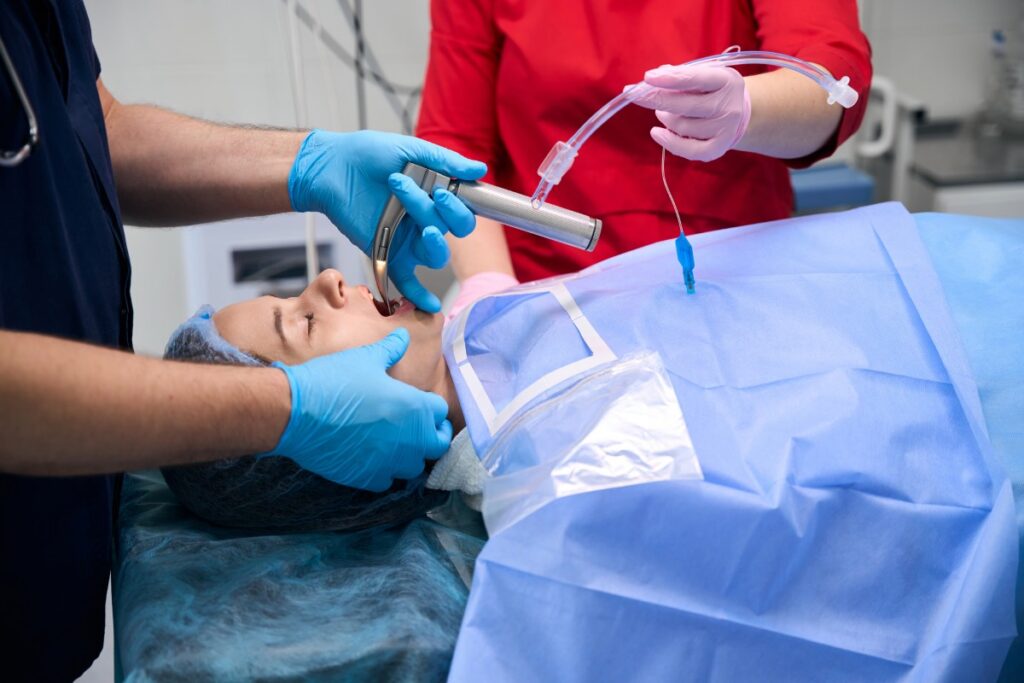
Although airway manipulation is an essential component of anesthesia and emergency medicine, it carries a recognized risk of injury to the mouth. Procedures such as endotracheal intubation, direct laryngoscopy, and the insertion of supraglottic airway devices can result in trauma to the teeth, lips, tongue, gums, and temporomandibular joint, especially in emergent settings in which speed can save a patient’s life. Dental injury is one of the most common anesthesia-related adverse events and a significant source of medical malpractice claims against anesthesiologists. The maxillary central incisors are particularly vulnerable because they are often subjected to pressure from laryngoscope blades during airway instrumentation.
The incidence of mouth injury during airway manipulation varies depending on patient characteristics, operator experience, and methods used to detect trauma. Reported rates of dental injury during general anesthesia range from 0.02% to 0.1% in retrospective studies, though prospective investigations suggest minor oral injuries may be more prevalent (2). Common injuries include enamel fractures, tooth subluxation, avulsion, lip lacerations, mucosal abrasions, and tongue trauma. More severe complications, though rare, may involve fractured teeth being aspirated or significant bleeding requiring dental intervention.
Several patient-related factors increase the likelihood of oral trauma during airway management. Poor dentition, periodontal disease, loose teeth, crowns, veneers, and extensive dental restorations are strongly associated with an increased risk of injury (2). Patients with limited mouth opening, reduced neck mobility, prominent upper incisors, or high Mallampati scores may experience more difficult intubation. This increases the amount of manipulation used during laryngoscopy. Emergency intubations further elevate the risk because clinicians often have limited time for a preoperative oral assessment and may encounter suboptimal airway conditions.
Technique and equipment selection also influence the risk of injury. Traditional direct laryngoscopy may place considerable pressure on the upper teeth when visualization of the vocal cords is difficult. Although video laryngoscopes have improved glottic visualization in many clinical settings, studies suggest that dental injuries can still occur (3). Repeated intubation attempts and excessive force during airway instrumentation are consistently associated with higher rates of trauma. Additionally, supraglottic airway devices and oral airways may cause soft tissue injuries if inserted improperly or used for extended periods.
Preventive strategies are important for reducing the risk of injury to the mouth during airway manipulation. A careful preoperative oral examination can help identify loose teeth, unstable restorations, and preexisting dental disease. Documenting vulnerable teeth and discussing risks with patients are recommended components of informed consent (1). Using a gentle laryngoscopy technique, avoiding excessive pressure on the incisors, and using alternative airway devices in difficult cases can substantially reduce the risk of trauma. For instance, some clinicians advocate using protective mouth guards for high-risk patients. Recent studies indicate that mouth guards may reduce dental injuries without significantly impairing intubation performance (4). Additionally, adequate training in airway management and adherence to difficult airway guidelines are essential for minimizing complications.
While many oral injuries associated with airway manipulation are minor and resolve without long-term consequences, some can result in pain, cosmetic concerns, costly dental treatment, and litigation. Early recognition and prompt dental referral are important aspects of postoperative care. An ongoing emphasis on prevention, operator training, and patient-specific risk assessment is critical to improving patient outcomes.
References
- Owen H, Waddell-Smith I. Dental trauma associated with anaesthesia. Anaesth Intensive Care. 2000;28(2):133-145. doi:10.1177/0310057X0002800202
- Chadwick RG, Lindsay SM. Dental injuries during general anaesthesia. Br Dent J. 1996;180(7):255-258. doi:10.1038/sj.bdj.4809045
- Tan Y, Loganathan N, Thinn KK, Liu EHC, Loh NW. Dental injury in anaesthesia: a tertiary hospital’s experience. BMC Anesthesiol. 2018;18(1):108. Published 2018 Aug 16. doi:10.1186/s12871-018-0569-6
- Adam M, Arhanić D, Alajbeg IZ, Matolić G, Krofak S, Vrbanović Đuričić E. Prevention of Oral Injuries during Endotracheal Intubation: Patients’ and Anesthesiologists’ Perspective. Acta Med Acad. 2024;53(2):123-135. doi:10.5644/ama2006-124.445