
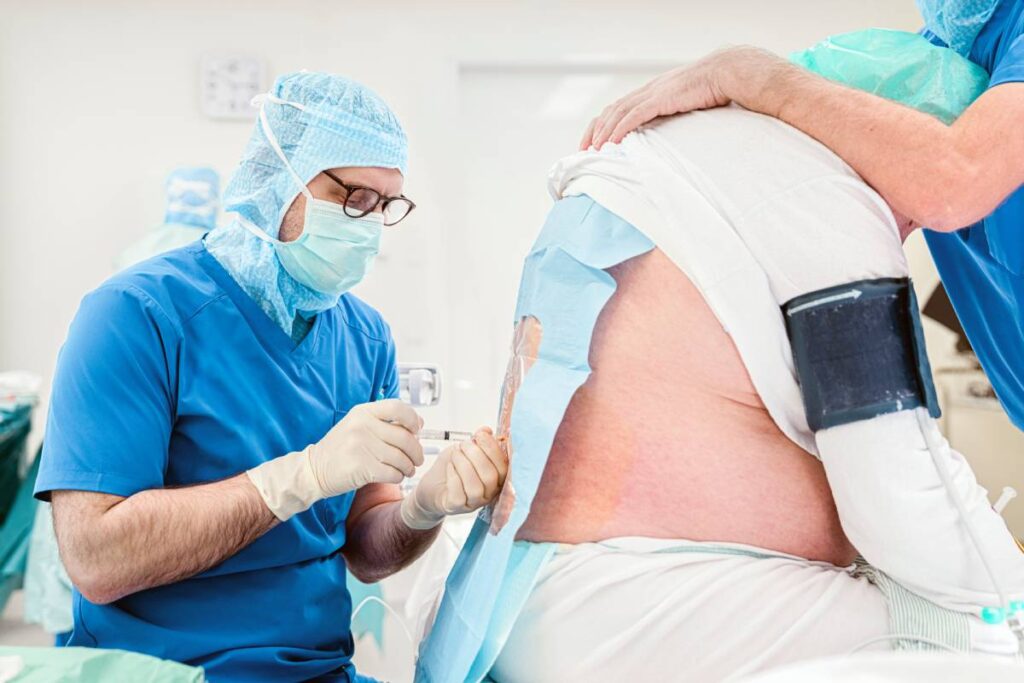
Obesity poses significant challenges to anesthesia management and increases the risk of complications. On average, as body mass index (BMI) increases, so does the likelihood of complications involving the airway, the respiratory system, cardiovascular stability, and anesthetic pharmacology. Understanding how these risk factors vary across different levels of obesity enables anesthesia providers to implement appropriate precautions and improve perioperative outcomes.
Respiratory compromise is a major concern in obese patients. Excess adipose tissue around the chest, abdomen, and upper airway reduces lung compliance, functional residual capacity, and expiratory reserve volume. These physiological limitations increase the risk of hypoxemia and rapid desaturation during apnea. Patients with morbid obesity (BMI ≥40 kg/m²) are particularly prone to perioperative hypoventilation, atelectasis, and postoperative respiratory failure if not closely monitored (1). Obstructive sleep apnea (OSA) is more prevalent and severe at this level of obesity, further increasing the risk of airway obstruction during sedation or anesthesia. Preoxygenation with positive end-expiratory pressure (PEEP) and positioning the patient in a ramped or head-elevated posture can help prevent hypoxemia and improve visualization during intubation. Patients with Class 2 (BMI 35 to <40 kg/m²) and Class 3 obesity (BMI ≥40 kg/m²) desaturate quickly during apnea, highlighting the need for skilled airway management and advanced equipment (2).
Cardiovascular risk increases directly with the level of obesity, with significant impacts on surgical and anesthesia care. An elevated BMI leads to a higher blood volume, increased cardiac output, and left ventricular hypertrophy. These factors collectively impair myocardial efficiency and oxygen delivery. Obese patients often develop diastolic dysfunction, systemic hypertension, and arrhythmias, such as atrial fibrillation. These conditions increase the risk of intraoperative hemodynamic instability and postoperative cardiac events. Furthermore, pulmonary hypertension and right ventricular strain occur more often in Class 3 obesity, particularly among patients with untreated obstructive sleep apnea. A comprehensive preoperative cardiovascular evaluation, optimization of comorbidities, and continuous intraoperative monitoring are essential to minimize the risk of decompensation under anesthesia (3). Maintaining vigilant fluid balance and promoting early postoperative mobilization can further reduce cardiac workload and thromboembolic risk.
Pharmacologic considerations play a key role in anesthesia for obese patients. Changes in body composition affect the distribution, metabolism, and elimination of anesthetic drugs. For example, lipophilic agents such as propofol distribute widely into adipose tissue, while hydrophilic drugs like rocuronium remain confined to lean body mass. Using total body weight for lipophilic agents and ideal or adjusted body weight for hydrophilic agents minimizes the risk of over- or underdosing (1). Patients with higher BMI may also experience delayed recovery due to increased fat storage of lipophilic drugs and slower clearance. Accurate dosing and close titration of anesthetic depth are essential to avoid prolonged sedation and respiratory depression postoperatively.
Perioperative strategies must be tailored to obesity level and class. Class 1 (BMI 30 to <35 kg/m²) and 2 obese patients generally tolerate anesthesia well when comorbidities are optimized and standard monitoring is applied. In contrast, class 3 obesity requires enhanced precautions, including specialized positioning equipment, extended preoxygenation, and postoperative noninvasive ventilation. Head-elevated recovery positioning, multimodal analgesia, and avoidance of long-acting opioids can reduce respiratory complications. Comprehensive planning and collaboration among anesthesiologists, surgeons, and nursing teams are crucial to ensuring safety (3).
In summary, anesthesia risk correlates directly with the level of obesity. Mild to moderate obesity poses manageable challenges, but morbid obesity significantly increases the risk of airway difficulty, cardiopulmonary instability, and altered pharmacokinetics. Classifying anesthetic management according to obesity class enables safer perioperative care and improved outcomes.
References
1. Seyni-Boureima R, Zhang Z, Antoine MMLK, Antoine-Frank CD. A review on the anesthetic management of obese patients undergoing surgery. BMC Anesthesiol. 2022;22(1):98. Published 2022 Apr 5. doi:10.1186/s12871-022-01579-8
2. Hardt K, Wappler F. Anesthesia for Morbidly Obese Patients. Dtsch Arztebl Int. 2023;120(46):779-785. doi:10.3238/arztebl.m2023.0216
3. Wynn-Hebden A, Bouch DC. Anaesthesia for the obese patient. BJA Educ. 2020;20(11):388-395. doi:10.1016/j.bjae.2020.07.003